
India's retail inflation rose to 4.38 per cent in June, driven primarily by costlier food items, pushing it above the Reserve Bank of India's median target of 4 per cent for the first time under the new series.

Analysts predict India will face oil price volatility and macroeconomic effects due to the escalating Iran crisis, though the country's oil supply chain is not yet structurally insecure.

Retail inflation rose to a three-month high of 1.33 per cent in December 2025 mainly due to higher prices of kitchen essentials, including vegetables and protein-rich items.

Only a limited set of investors should invest directly in corporate bonds.

US strikes on Iran's three main nuclear facilities have once again raised concerns that Tehran might shut down the Strait of Hormuz - one of the world's most critical chokepoints, through which a fifth of global oil and gas supply flows.

Equity-focused schemes may perform better in a bull market, while debt-oriented ones may offer greater stability during volatile periods.

However, Icra Rating Principal Economist Aditi Nayar feels that the numbers are a bit too optimistic and need real heavy-lifting by the Centre and the states. "The survey forecasts on real and nominal GDP will require a substantial push from Central and state spending as private sector capacity expansion is anticipated to be intermittent, and sector-specific in the next couple of quarters," she said. Nayar added that private consumption is likely to chart a differentiated recovery across income and age groups. Based on the comments made in the Survey, she expects the Union Budget to incorporate a growth in gross tax revenue of 15-16 per cent.


Over the past several months, the airline has struggled to pay vendors and staff salaries on time.

'Pump prices of petrol and diesel have reached historical highs. An unwinding of taxes on petroleum products by both the Centre and the states could ease the cost-push pressures,' the Monetary Policy Committee (MPC) has said.

An expected withdrawal of FIIs from the market likely to weaken the rupee against the dollar.

Investment growth moderated slightly in the economy during the first quarter (Q1) of the current financial year (2023-24, or FY24), notwithstanding the front-loading of capital expenditure (capex) by the Centre. This was also the case despite a pick-up in demand during the period after two dismal consecutive quarters. Although growth in gross fixed capital formation (GFCF), representing investment, fell to a five-quarter low of 7.96 per cent, the comparison with the first two quarters of the previous year is a bit askew due to the low year-on-year (Y-o-Y) base of those periods.

Moody's on Thursday upped India's growth projection for the next financial year beginning April 1, to 13.7 per cent, from 10.8 per cent estimated earlier, on the back of normalisation of activity and growing confidence in the market with the rollout of COVID-19 vaccine. For current fiscal, the US-based rating agency expects the economy to contract 7 per cent, lower than its previous estimate of 10.6 per cent contraction.

The states that witnessed high CPI-based inflation rates were Lakshadweep, Tripura, Odisha, Uttar Pradesh, Kerala, Madhya Pradesh, Puducherry, Tamil Nadu, Rajasthan, Manipur and Mizoram.
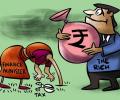
While the tax-to-GDP ratio of 9.88 per cent has been assumed for FY21, the same as last year, when it touched a decadal low, for FY22 a ratio of 10.7 per cent has been assumed, an average of the last five years.

Reliance Power (RPower) has defaulted on payment of interest worth Rs 1.17 crore to DBS Bank India and Rs 44 lakh to IDBI Bank. It failed to pay up interest on October 30, 2021. The firm, part of the Anil Ambani-promoted Reliance group, in filing with BSE, said it has term loans and working capital arrangements with three lenders - YES Bank, IDBI Bank and DBS. Its stock closed 1.41 per cent lower at Rs 12.6 per share on the BSE on December 1. About exposure of YES Bank, there is a 'standstill' applicable till December 26, 2021.

Instead of a rate hike, or even a pause, there could be a window for the RBI for an interest rate cut
India Ratings principal economist Sunil Kumar Sinha said the Brexit is a mixed bag for the country.
By no means do economists see the Reserve Bank of India stop at just a 25-bp cut. Some of the economists such as Soumyakanti Ghosh of State Bank of India are of the firm view that rates have room to fall by a total of 75 bps in the current financial year, starting with 25 bps in the August 7 policy.
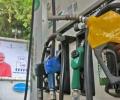
This may come as a surprise to many. Retail price inflation in petrol was the lowest at 10.21 per cent in March since November 2020. In diesel, it scraped the bottom of the barrel at 5.19 per cent in the last month of 2021-22 since February 2020. Even liquefied petroleum gas (LPG) was at a nine-month low of 9.97 per cent in the month.

Keep a close eye on credit quality, financials of NBFCs before investing. These instruments should not constitute more than 15 to 20 per cent of your debt portfolio.

The wholesale price-based inflation rose for the second consecutive month in February to 4.17 per cent, as food, fuel and power prices spiked. The WPI inflation was 2.03 per cent in January and 2.26 per cent in February last year. After witnessing months of softening of prices, the food articles in February saw 1.36 per cent inflation. In January it was (-) 2.80 per cent.

Officials from State-run refiners contend that savings from purchase of Russian oil are used to offset a part of the losses in revenues from selling transport fuels and LPG at State-set rates.

The output of eight core infrastructure sectors grew marginally by 0.1 per cent in January, mainly due to growth in the production of fertiliser, steel and electricity. The core sectors had expanded by 2.2 per cent in January 2020, according to the provisional data released by the commerce and industry ministry on Friday. Coal, crude oil, natural gas, refinery products, and cement recorded negative growth in January.

Outlay for infra is also expected to see a significant increase in view of the government's Rs 111-trillion investment plan under the national infrastructure pipeline to develop social and economic infrastructure over five years.

For the first time in 21 years, the Reserve Bank of India (RBI) will revise norms for investment portfolios of commercial banks to reflect changes in global standards on valuation and measurement, and progress in the domestic market. This could pave the way for banks to transition to the new accounting standards (Ind-AS). The outstanding investment portfolio of commercial banks was at Rs 45.84 trillion as of November 19 this year.

The output of eight core infrastructure sectors contracted for the third month in a row by 1.3 per cent in December 2020, dragged down by poor show by crude oil, natural gas, refinery products, fertiliser, steel and cement sectors. The core sectors had expanded by 3.1 per cent in December 2019, according to the provisional data released by the Commerce and Industry Ministry on Friday. Barring coal and electricity, all sectors recorded negative growth in December 2020. During April-December 2020-21, the sectors' output declined by 10.1 per cent against a growth rate of 0.6 per cent in the same period of the previous year.


Infra segment, refinery product impacted the most, even as contraction narrows in latest month.

The output of eight core sectors declined by 4.6 per cent in February, the steepest contraction in the last six months which experts said could drag the overall industrial production in the month into the negative territory. All the key segments, including coal, crude oil, natural gas, and refinery products, witnessed a decline in production, according to the official data released on Wednesday. The growth rate of the eight infrastructure sectors -- coal, crude oil, natural gas, refinery products, fertilisers, steel, cement and electricity -- stood at 6.4 per cent in February 2020. Last time in August 2020, the sectors had recorded a negative growth of 6.9 per cent.

Since January 2021, the inflation rate in health has stood in the range of 6.08-8.44 per cent.

Barring coal and fertiliser, all sectors -- crude oil, natural gas, refinery products, steel, cement and electricity -- recorded negative growth in August.

At over 6 per cent, most states in October had inflation rates above the Reserve Bank of India's target band of 2-6 per cent.

Options include fresh capital infusion by the management and/or some new investors.

Barring fertiliser, all seven sectors -- coal, crude oil, natural gas, refinery products, steel, cement and electricity -- recorded negative growth in July.

If raters get away by moving from AAA to D overnight after companies default, as happened with DHFL, YES Bank, RCom, and IL&FS, it shows a complete breakdown in the rating system. It calls for exemplary punishment, not kid glove treatment, says Debashis Basu.

India's industrial production grew by 1 per cent in December, official data showed on Friday. According to the Index of Industrial Production (IIP) data, the manufacturing sector output grew by 1.6 per cent in December 2020.

Declining vegetable prices brought down the retail inflation to a 15-month low of 4.59 per cent in December and within the comfort zone of the Reserve Bank, government data showed on Tuesday. It is for the first time during the current fiscal that the Consumer Price Index (CPI) based inflation print is below 6 per cent or in the RBI's target range of 2 to 6 per cent. The central bank factors in the CPI-based inflation while arriving at its monetary policy. The inflation in December 2020 came down from 6.93 per cent in November, mainly on account of 10.41 per cent decline in vegetable prices over the year-ago period.

The retail inflation rate breached the 6 per cent upper tolerance limit of the RBI for the first time in seven months in January, while the wholesale price index stayed in double-digits for the 10th month in a row, showed two sets of data released by the government on Monday. Retail inflation, the key input for the RBI while reviewing the repo rate every two months, soared during the month mainly because of a spike in certain food items. The previous high for retail inflation was 6.26 per cent in June 2021.

If imputed inflation for April and May is used, then you have inflation of over 6 per cent for two consecutive quarters, which is a worrying signal for the RBI.
